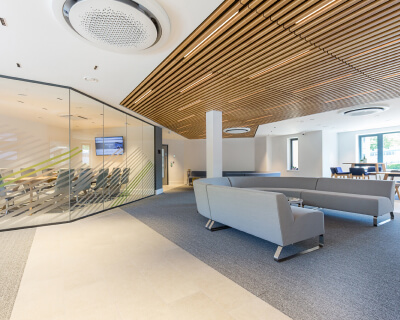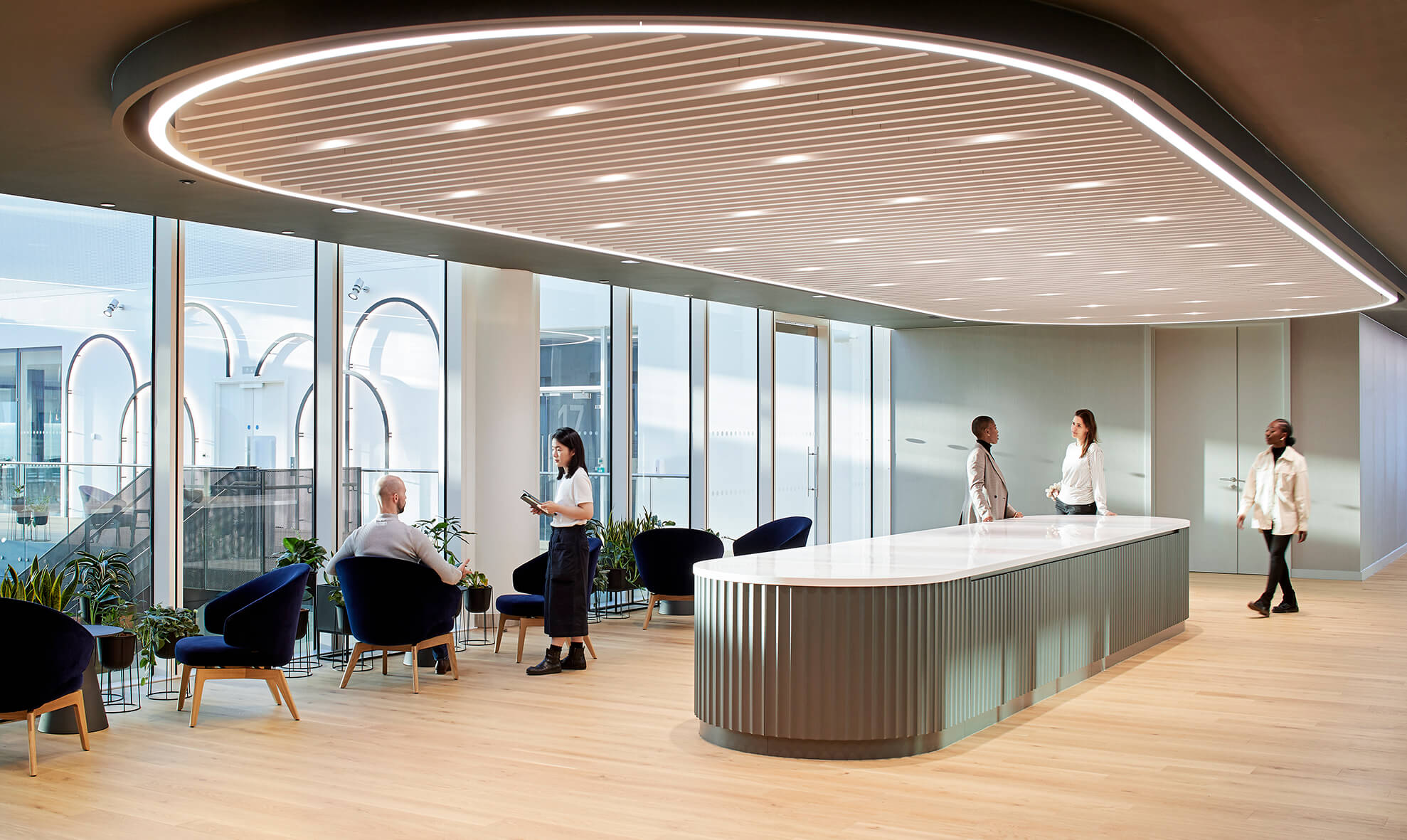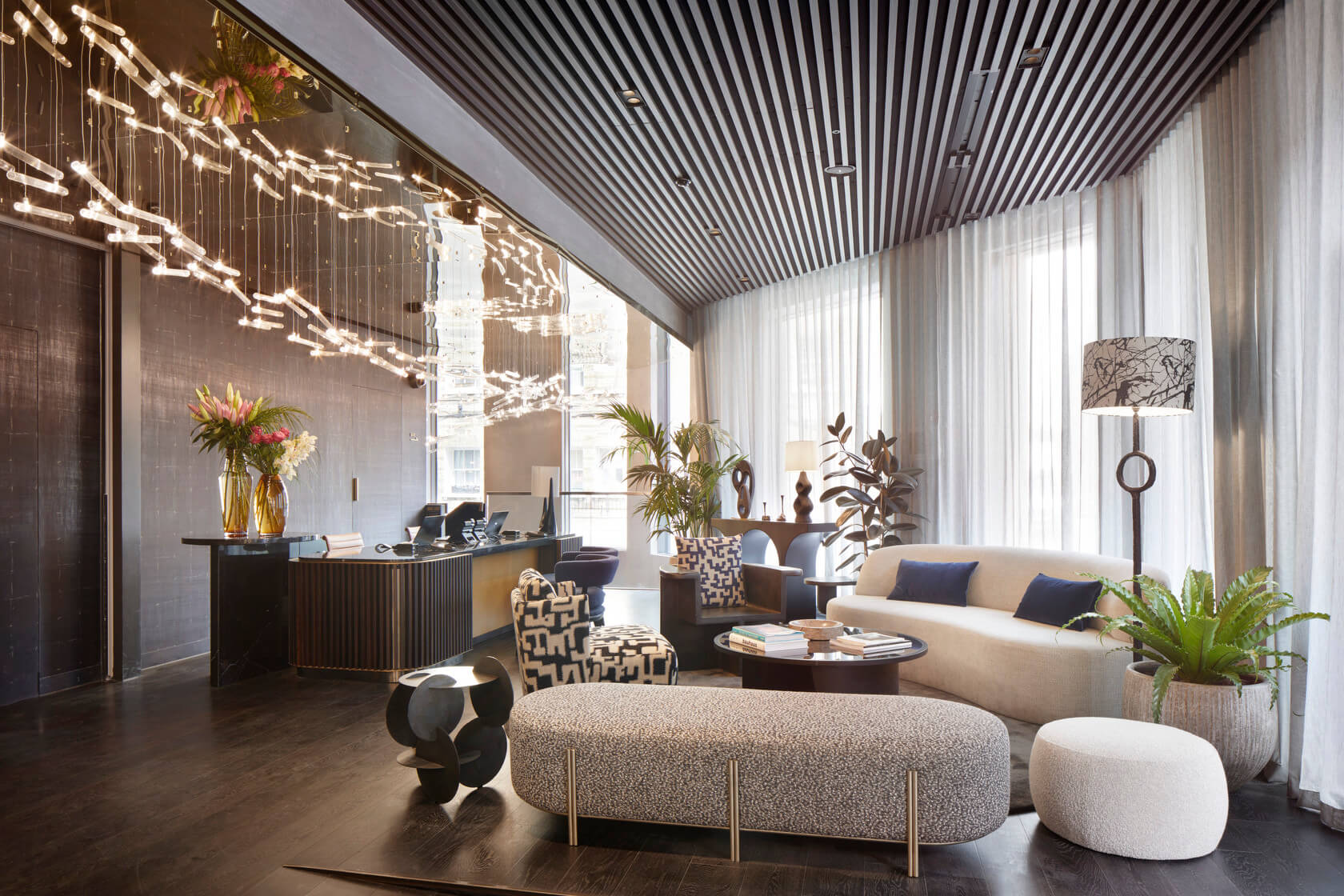
Vtec ceiling and wall systems are frequently required to integrate with Mechanical and Electrical (M&E) services, and we are often asked how this is achieved in practice. Our Slats, Beams and Acoustic range – ARCHISLAT, MAXISLAT and MICROSLAT systems – can all incorporate different access requirements, service integrations, bespoke geometric shapes and angled ends. With our extensive experience, we ensure the successful integration of M&E elements using a variety of proven methods.
Below, we’ll provide all the information needed for planning and integrating M&E services into acoustic linear ceilings and walls, and address the most common queries from architects, contractors, and consultants when specifying an acoustic slatted ceiling, acoustic linear ceiling or ceiling mounted acoustic ceilings.
Ceiling systems play a pivotal role in shaping the functionality and atmosphere of interior spaces, whether in bustling train stations, vibrant shopping centres, or modern office environments. The right ceiling solution not only enhances the visual appeal of a room but also contributes significantly to its acoustics and overall comfort. With a wide range of ceiling tiles, acoustic ceiling tiles, ceiling panels, and suspended ceiling systems available, it’s important to select a system that aligns with your project’s specific requirements.
Acoustic ceiling tiles and panels are especially valued for their ability to provide sound insulation, helping to create quieter, more productive spaces. These systems are designed to absorb sound, reducing noise levels and improving the acoustic quality of any room. From traditional suspended ceilings to innovative acoustic ceiling solutions, the choice of materials and systems can make a substantial difference in both the look and function of your interior. In this section, we’ll explore the various types of ceiling systems, their benefits, and the key factors to consider when choosing the ideal solution for your space.
Selecting the right ceiling material is essential for achieving the desired performance and aesthetic in your project. Traditional systems like suspended ceilings remain a popular choice due to their versatility and ease of installation. These systems typically use ceiling tiles or panels that can be quickly fitted into a ceiling grid, making them a cost-effective and practical solution for commercial spaces.
Acoustic ceiling panels and tiles are engineered to absorb sound, making them ideal for environments where controlling reverberation and echo is important, such as open-plan offices, classrooms, and public areas. These materials help to create a more comfortable and productive environment by minimising unwanted noise. In addition to acoustic options, materials like metal and mineral wool are also commonly used in ceiling construction, offering benefits such as durability, fire resistance, and sustainability.
Each material brings its own set of advantages, from the easy maintenance and replacement of ceiling tiles to the superior sound absorption of acoustic panels. By understanding the range of available materials and their unique properties, you can select a ceiling system that not only meets your acoustic and functional needs but also enhances the overall design of your space.
Before detailing an M&E suspended ceiling, it’s vital to establish the project’s requirements. Early discussion with you or your client allows us to advise on the best way of integrating M&E into our systems.
Selecting the right class of acoustic ceiling ensures optimal sound absorption and compliance with industry standards.
Each of these is explored in detail below.
Integrated ceiling systems offer a host of benefits that go beyond simple aesthetics. By combining elements such as lighting, air conditioning, and suspension systems within a single ceiling solution, you can transform any space into a more functional and visually appealing environment. Acoustic ceilings, in particular, are designed to absorb sound and provide effective sound insulation, which is crucial in reducing noise and creating a comfortable atmosphere in busy or open-plan areas.
These systems are especially beneficial in environments where noise control and energy efficiency are priorities, such as offices, schools, and commercial buildings. Integrated ceiling systems can help lower energy costs by improving the efficiency of lighting and HVAC systems, while also enhancing indoor air quality. The ability to seamlessly incorporate various components means that the ceiling not only looks cohesive but also performs multiple functions, contributing to the overall well-being and productivity of occupants.
With the right integrated ceiling system, you can achieve a balance between form and function, creating a space that is both beautiful and practical. Whether you’re looking to improve acoustics, streamline maintenance, or simply elevate the design of your interior, integrated ceiling solutions offer a versatile and effective answer.
Lighting is one of the most frequent requests when designing an acoustic linear ceiling. We begin by asking:
By working from detailed drawings and coordinating with lighting designers, we ensure a seamless integration of lighting and acoustic performance in your ceiling mounted acoustic ceilings.
Heating, ventilation, and air conditioning often require careful planning when working with a M&E suspended ceiling. We ask:
All these methods are designed to make it easy to install HVAC components within the acoustic linear ceiling.
This ensures both airflow and acoustic requirements are met without compromising visual alignment.
Fire protection elements are essential to consider early. We coordinate to establish:
This ensures compliance while maintaining the integrity of the acoustic ceiling section detail.
Maintenance is a critical factor in designing ceiling mounted acoustic ceilings. We ask:
Intentional gaps between ceiling panels can also facilitate maintenance access and enhance the ceiling’s modern design and acoustic performance.
This ensures that lighting, HVAC, or data equipment can be serviced without disrupting the entire ceiling.
Yes. We provide fully tested Euroclass B fire-compliant acoustic slatted ceiling systems. Our systems have been tested as fully assembled units, ensuring compliance across all design configurations. This is essential for projects in the UK and EU, where compliance with fire safety standards is non-negotiable.
By selecting a M&E suspended ceiling that already meets fire regulations, you reduce project risk and ensure smooth approval. These Euroclass B fire-compliant systems are suitable for a wide range of commercial and public environments.
Modern projects often require AV, electrical, and data services to be incorporated seamlessly into an acoustic slatted ceiling or acoustic linear ceiling. The first step is to identify the type of equipment needed, such as screens, speakers, or data ports, along with how they will be mounted. Some units may be recessed, others surface-mounted, and some suspended, so their weight, clearance, and access requirements must all be considered.
To achieve a smooth integration, Vtec manufactures bespoke openings for larger items like AV screens, precise cut-outs for speakers, or open panel designs to accommodate cabling and smaller fittings. Where necessary, pattresses are used to provide safe fixing points for electrical equipment. This ensures every M&E suspended ceiling maintains its acoustic performance, visual consistency, and compliance while still meeting technical requirements.
At Vtec we can also supply all necessary components and accessories required for integrating AV, electrical, and data equipment into acoustic linear ceilings.
An acoustic ceiling section detail provides the cross-sectional drawing needed to coordinate services within a suspended ceiling system. It typically shows:
This detail ensures that all trades can work from the same plan, avoiding costly clashes on site.
With so many ceiling systems available, selecting the right one for your project can seem overwhelming. It’s important to consider key factors such as sound insulation, the ability to absorb sound, and the type of suspension system that best suits your space. Acoustic ceiling tiles and panels are excellent choices for areas where controlling reverberation and noise is essential, providing superior sound absorption and enhancing the overall acoustic environment.
Suspended ceiling systems are a cost-effective solution for covering large areas, offering flexibility and ease of access for maintenance. When making your decision, think about the long run – consider the durability, maintenance requirements, and energy efficiency of each option. The right ceiling system should not only meet your immediate needs but also provide lasting value and performance.
By carefully weighing the benefits and potential drawbacks of each system, you can create a space that is both functional and visually appealing. Our team of experts is here to support you throughout the selection process, ensuring you achieve the best possible outcome for your project. Whether you’re an architect, designer, or homeowner, we’re committed to helping you create a ceiling solution that exceeds your expectations and stands the test of time.
Ultimately, our ceiling systems have been specifically designed to easily adapt to suit your unique project application, as well as deliver compliance and strong visual and acoustic impact.
As detailed above, we can incorporate M&E requirements such as lighting, HVAC, fire detection sprinklers and access requirements. At times we have created bespoke adaptations to achieve the best result for the client if required, so if you have any specific technical challenges then please do get in contact. We are always happy to help.
We routinely collaborate on complex projects and will work closely with you to help solve design challenges that may arise, resulting in a top-quality finish, smooth installation and excellent results. Our proven design quality, flexibility and industry expertise make us the perfect partner to deliver your acoustic wall and ceiling solutions.